Showing posts with label Irish Society for Archives. Show all posts

Monday, December 10, 2018

IRISH ARCHIVES AT THE GATE


Click on any image for a larger version

It's more a question of Irish archives in City Hall alongside the Gate.

Archives: the launch of the 2018 Journal of the Irish Society for Archives.

Gate: an exhibition from the archives of the Gate Theatre.

In fact these blend harmoniously as the current journal is dedicated to The Gate Theatre at 90.


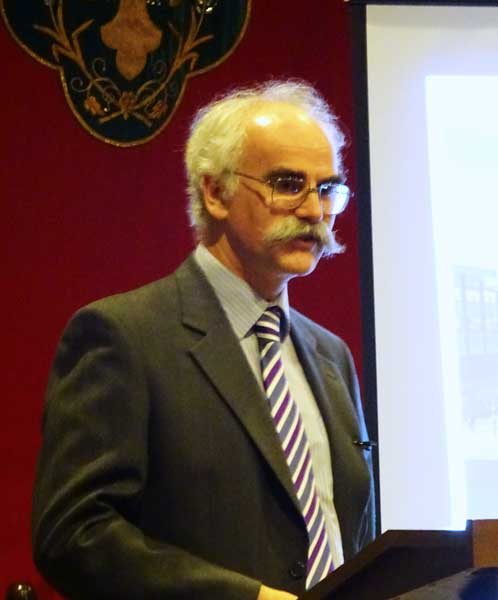
Raymond Refaussé

Raymond is Chair of the Irish Sociey for Archives (ISA) and he welcomed us to this event which was the launch of the Society's journal for 2018.

This year's journal has a graphic upgrade and appears in full colour thanks to sponsorship by Dublin City Council's Centenary of Commemorations.


Nial Ring

Dublin's current Lord Mayor, Nial Ring, launched the publication, though, as he commented, there is no specific protocol for the actual act of launching. Not like with a ship.

Anyway when he got to that point at the end of his speech he just declared it launched. I've done this myself and it's a funny feeling. Nothing happens, no trumpets, no thunder and lightening. The launched publication looks no different from the unlaunched one. A bit like transubstantiation and thank God we all understand that even if we don't fully subscribe to it.

Anyway Nial stressed the importance of archives and of respecting the past. He got a round of applause and "hear hears" when he underlined the necessity of ensuring the teaching of history in the schools. It's part of what we are.

I'm sure he won't mind me saying this - you might as well be listening to Bertie, the voice that is. However, where Bertie tended to talk in rambling riddles, Nial was a model of clarity.


Elizabeth McEvoy

Elizabeth is one of the two co-editors of the journal and in a substantial speech she went into the history of the Gate Theatre includingg the tremendous contribution of Micheál Mac Liammóir and Hilton Edwards to Dublin theatre in general.


I'm not going to labour this one but who did I find myself sitting beside but Sabina Higgins, who, thankfully, is still Ireland's First Lady. This sort of completed a mystical circle as the last time the Gate and the Presidency came into my life together was when a quartet of us pupils from Coláiste Mhuire played the presidential salute to welcome Dev and Sinéad to the opening of Féile Drámaíochta na Scol in the Gate around 1960.

That's Pamela McDermott (on the right) who took my photo with Sabina (centre) at the Photo-Detectives exhibition in Temple Bar last year. What goes around comes around.


And that's the pair of them with what I'll bet is the youngest version of Micheál you've ever seen.


Elizabeth with my favourite archivist, Ellen Murphy. Ellen has just moved from Dublin City Archive to the Registry of Deeds. While it's a step up for her she'll be missed at the archive where she has been doing trojan work for yonks. Anyway, congratulations Ellen.
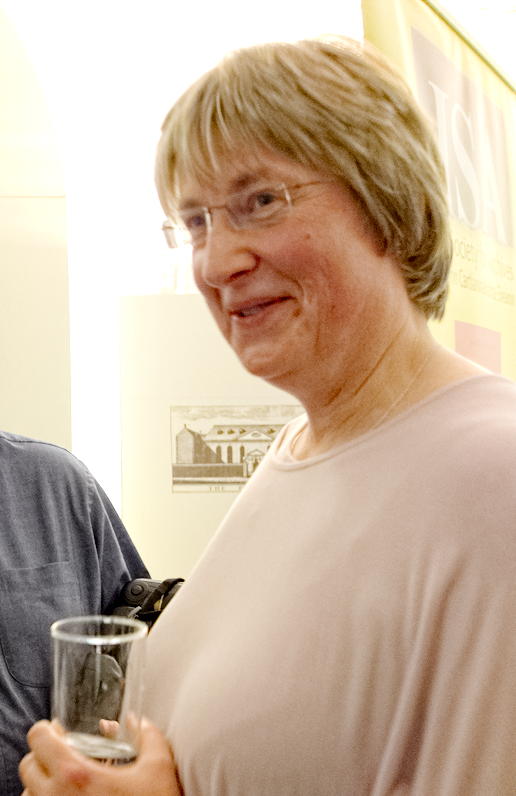


Susan Hood who is the other co-editor of the journal. Susan took over as Librarian and Archivist at the Representative Church Body (RCB) Library from Raymond Refaussé when he retired in 2016. Belated congratulations to Susan.


Mary Clarke, Dublin City Archivist, has just spotted me taking a sneaky photo.


Brian Donnelly, from the National Archives, is Vice-Chair of the ISA. I must remember to approach him sometime to see if I can get full access to my grand aunt's records from Grangegorman and Portrane.
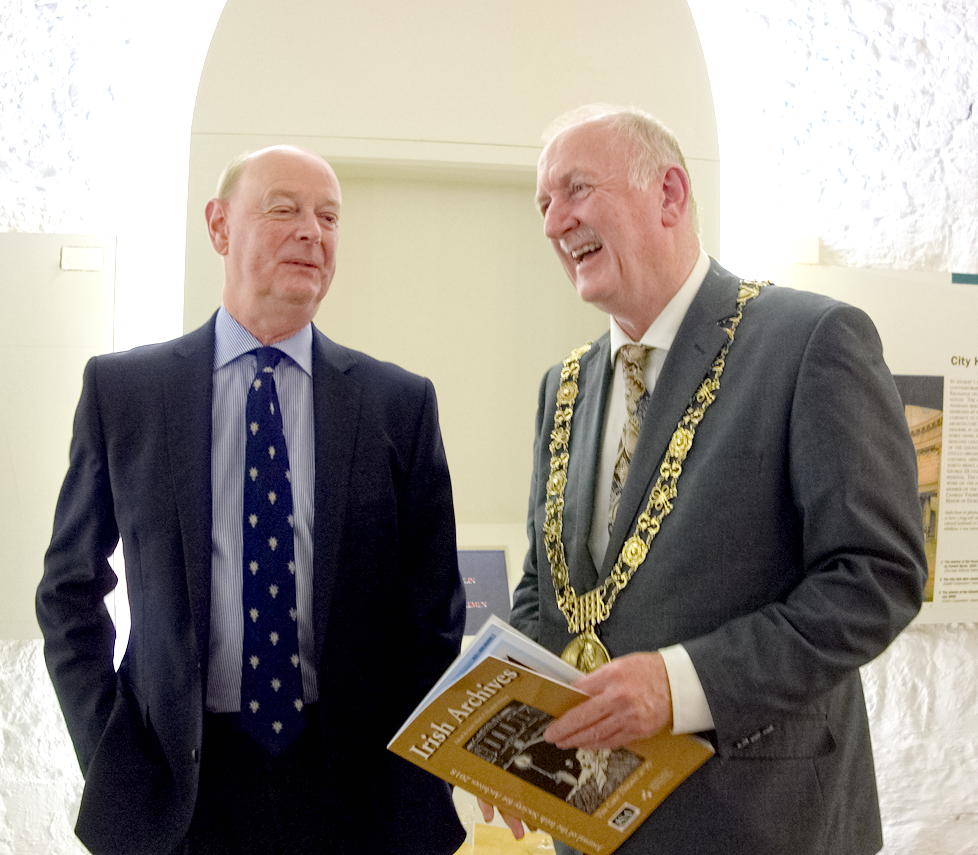


Raymond shares a joke with Nial.


But Nial still can't find his name in the journal.


Meanwhile, back at the ranch copies of the journal, that big pile in the middle, are being snapped up.

City Hall, at the moment, is also entertaining passer by with its winter lights.


Snippets from the Exhibition


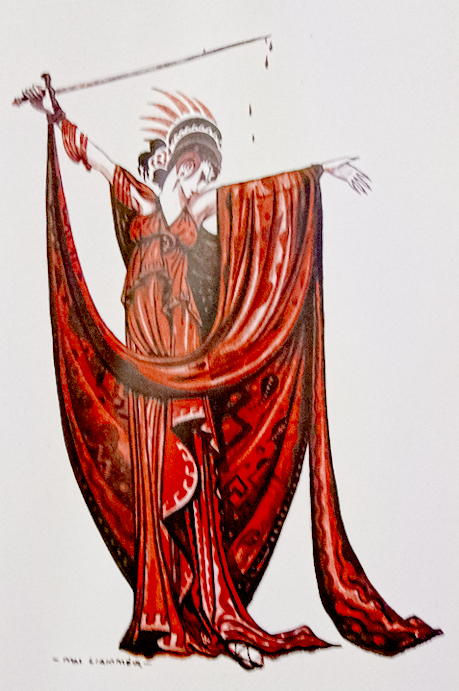
Clytemnestra from Agamemnon - Micheál's design


Micheál & Lady Friend


Our Lady of Connemara

Do drop in to City Hall and check out the exhibition and get yourself a copy of the journal which describes the many locations and content of the theatre's archive.

Wednesday, November 16, 2016

IRISH ARCHIVES 2016


Click on any image for a larger version

Last night saw the publication of IRISH ARCHIVES 2016. This is the annual journal of the Irish Society for Archives (ISA) which was founded by Robin Dudley Edwards in 1970, so it's been in existence for almost half a century at this stage.

The event took place at the newly refurbished reading room at the National Archives of Ireland.

Each year's edition concentrates on a particular theme and this year it was "Hidden Pages from the 1916 Rising". This recapped on a seminar held in February 2016 on this theme in St. Thomas and St. George's church in Cathal Brugha St.


Elizabeth McEvoy, Joint Editor, Irish Archives

As far as the theme was concerned, the idea was to present research on the Rising from lesser known archives. These included the St. John's Ambulance, the Post Office (GPO & London HQ), the Monica Roberts Collection (diaries and correspondence exchanged with the troops on the Western Front), the Irish Architectural Archive (damage to buildings) and the Co. Wexford Archive (contribution of three families to the Rising).


Raymond Refaussé, Chairman, ISA

In an additional paper in IRISH ARCHIVES, which was not part of the original seminar, Church of Ireland parish documents from around the country, including newsletters, preachers books and correspondence, are drawn on.


Lia Mills, author

The volume was launched by Lia Mills, whose book "Fallen" was chosen for this year's Dublin One City One Book Festival. Except this year it was two cities one book when Dublin readers were joined by those in Belfast. The story deals with conflicting loyalties in the twin conflicts of WWI and the Rising. So Lia was an excellent choice to launch the current volume.

She didn't mince her words in criticising what is effectively a decline in popular literacy with the current widespread debasement of words. She had me thinking once again of George Orwell's Newspeak.

She was also lavish in her praise of the vital role of the archivist in preserving past and present material and in presenting it in digestible form to the wider public.


Susan Hood, Joint Editor, Irish Archives


Refurbished Reading Room, National Archives of Ireland


So it's full marks to the ISA for a highly relevant publication in this year of commmoration of the Rising and for continuing to validate the role of the archivist as a pro-active guardian, not only of our history, but of the underpinnings of our civilisation and of who we are.

Copies of IRISH ARCHIVES 2006 can be purchased from Easons bookshops or by mailing Elizabeth McEvoy

Thursday, February 04, 2016

HIDDEN PAGES 1916


Welcome to St. Thomas & St. George Parish Church

This is how the occasion was announced to the press:
"The Irish Society for Archives in conjunction with An Post will host a novel seminar Hidden Pages From the 1916 Rising, at which five archival curators will engage with the public to explore some of the little-known archival sources about this momentous event."
If anything it was an understatement. There were fascinating presentations of new archives, and old ones put to new use, in the exploration of what really happened in 1916.

The venue itself was a piece of history. Its location, structure and financing owed everything to the revolutionary period.
"The Church of St George and St Thomas, Cathal Brugha Street, Dublin (located alongside the Gresham Hotel) was rebuilt in the 1930s following the destruction of an older church (originally located in Marlborough Street) during the Revolutionary period in 1922."
I had been in this most unusual church once before. Originally St. Thomas's, it inherited the parish of St. George from Hardwicke Place when that church ceased to have a religious function and the two parishes were amalgamated. My interest was in St. George's where Richard Brewster, a parishioner who died in WWI was commemorated. While some of the relevant plaques still remain in the old St. George's building, one has transferred to St. Thomas's. You can read all about this here.


Rector Revd Obinna Ulogwara

The Rector, Revd Obinna Ulogwara, made us all very welcome. And with nothing short of an Irish sense of humour told us which two exits to use in case of an emergency. Use of the third exit could lead to us being run over by a bus.


Dr. Raymond Refaussé

Raymond Refaussé, Librarian and Archivist at the Representative Church Body (RCB) and a man with archives in his blood, introduced the occasion and gave us some idea what was in store for us.


Patsy McGarry

Our MC for the night was Patsy McGarry, more usually the religious affairs correspondent of the Irish Times, but currently engaged in resisting an attempted landgrab by Co. Westmeath of a not insubstantial chunk of Co. Roscommon, his home county.

Patsy guided us smoothly and entertainingly through the evening's speakers.


Colm O'Riordan

Our first stop was the Irish Architectural Archive in Merrion Square. I've been in there and they have whacks of very interesting stuff on the built environment. Colm took us through some of the structures relevant to the 1916 Rising, not forgetting the GPO and the RHA HQ in Lower Abbey Street. Both these buildings were destroyed in the rising, making for two out of three hits on the works of Francis Johnston in the city centre. The third strike on his city center work had to wait for the 50th anniversary of the Rising - Nelson's Pillar.

I was particularly interested in the enormous bakery that was destroyed at the bottom of O'Connell Street. It had been a most out of place building. Its successor became the central cinema with its controversial canopy defying city ordinances, though Colm didn't mention this particular mortal sin by Councillor O'Farrell.

Colm told us how, in the reconstruction of O'Connell St., the Corporation for the first time insisted on controlling the façades of the new buildings. This led to some serious rows but the Corpo held their ground. If this "enlightened" approach had continued into independence we might have been spared some of the abominations that were permitted in the name of progress in the latter half of the 20th century.


Ellen Murphy

Ellen Murphy, Senior Archivist at Dublin City Library and Archives, revealed ‘Reactions to the Easter Rising in the Monica Roberts Collection at Dublin City Library and Archive’ under the heading: "It was grand to see our Tommies".

This archive is a collection of correspondence between Monica Roberts and the troops at the front in WWI along with a short diary of Monica's own contemporaneous reactions to the Rising. The tone is British and Unionist and the sentence quoted above was her reaction to the arrival in the city of British army reinforcements.


Gráinne Doran

Wexford County Archivist, Gráinne Doran took us to one of the other parts of the country outside Dublin where there was significant action during the Rising. Her current project is ‘The collective effort of the men and women in County Wexford, Easter 1916’, and it is concentrated on the action in Enniscorthy. There is an emphasis on oral history as well as the usual written and visual sources. She will be covering not just the activity in Co. Wexford itself but also action by Wexford people in the capital.


Pádraig Allen

Pádraig Allen took us through the emergency medical response to the Rising, as revealed through the newly discovered archives of St John Ambulance Ireland. These are full of fascinating stuff. They are particularly relevant in the context of redressing the current gender imbalance in the reporting of the Rising.The medical response was an area in which women distinguished themselves at all levels.

Pádraig wore the 1916 John's Ambulance uniform which he had specially made for this centenary year.


Stephen Ferguson

Stephen Ferguson, Assistant Secretary at An Post, was talking about ‘The staff of the GPO during Easter Week, 1916". In fact he gave us a thrilling sequence of stories on how the Rebels neutralised the city's communications hub and on the ingenuity of some of the staff in re-establishing alternative communications routings.

He also drew our attention to the current importance of the central Post Office archive in London, given the destruction of so much material in the GPO.


There was a very lively and lengthy Q&A at the end where the questions and answers competed with a host of new stories recounted by members of the audience.

The Irish Society for Archives and An Post are to be commended for sponsoring a great evening. And particular thanks are due to Dr. Susan Hood, Assistant Librarian and Archivist at the RCB, for a flawless piece of organisation.