Showing posts with label Alliance Française. Show all posts

Friday, May 31, 2019

DOMINIQUE A


Click on any image for a larger version


The Director welcomed everybody to the event, including those sitting in the reserved seats in the first two rows. It seems like this was a big occasion.

Dominique A, singer, composer and author, is clearly big on the scene at home in France.


I had met Loïc once before when, funny enough he was interviewing a French author Philippe Djian who had just written a dirty book which was in for some prize or other.

Tonight he was interviewing Dominique whom AMOPA (see below) had invited over specifically for this occasion.

Just like the last time I noticed that at least one other event was slipped into the trip.

Loïc has just finished a term as President of the newly formed AMOPA and is now the Honorary Consul for France in Ireland's mid-west.

He introduced Dominique, listing some of his many achievements, and then got down to business as in the first shot above.


Dominique did the interview seated as in the first shot above, but given the lighting problems for photos (see below) I'm using some post-interview shots here.

My own impression, from the few tracks played, was of something in the style of Leonard Cohen with perhaps a bit more melody and a trademark of stopping mid-phrase.

Dominique is a flag bearer for a particular style of song for almost a generation at this stage. I gather he experiments with form but we only heard a few tracks in broadly similar style.


The idea seems to have been to veer away from what were seen as "talkies" (chansons à texte) with the likes of Brel and Brassens and go for more melody. The nuances here, I must confess, are a bit beyond me. It would probably take a lavishly illustrated talk on its own to get to the bottom of this.

What I could appreciate is that Dominique has a lovely voice and he sings true.

Dominique is clearly accepted as an exponent of French culture abroad. In 2007 the Alliance invited him to perform in Argentina and here he is tonight.


In fact, only a short while ago in 2016, he was made a Chevalier de l'Ordre des Arts et des Lettres.

Despite this not being quite at the top of the heap of French honours and even though Chevalier is the lowest of the three grades of the award, you can see below that it has gone to some heavy hitters. And they're just the ones whose names I recognised.
L’ordre des Arts et des Lettres est une décoration honorifique française qui, gérée par le ministère de la Culture, récompense « les personnes qui se sont distinguées par leur création dans le domaine artistique ou littéraire ou par la contribution qu'elles ont apportée au rayonnement des arts et des lettres en France et dans le monde.

Jane Birkin
Dirk Bogarde
Carla Bruni Sarkozy
Tim Burton
Jim Carrey
Jackie Chan
Jacques Chirac
George Clooney
J. M. Coetzee
Céline Dion
Declan Donnellan
René Goscinny (Astérix)
Jean-Claude Juncker
Jude Law
Kylie Minogue
Jean Quatremer
Sting
Uma Thurman
Source

Jean Quatremer is an interesting entry on the list. I'm not sure why he's still there as he has returned his honour. It was awarded without notice or consent (went to the wrong address) and he did not think it appropriate for an independent journalist to accept honours from a governement. I gather he may reconsider the matter when he retires. Perhaps that's why he's still on the list (pending!).

He is the journalist who recently exposed the Selmayrgate scandal at the heart of the EU Commission.

Quatremer has figured prominently in my Twitter timeline

AMOPA


AMOPA is an association of those who have been awarded the Ordre des Palmes Académiques by the French government. It's a sort of knighthood awarded for a significant contribution to French language and culture.

The Association in its own words:
L’AMOPA Irlande est la section irlandaise de l’Association des Membres de l’Ordre des Palmes Académiques, association française reconnue d’utilité publique. L’une des principales missions de l’AMOPA Irlande, association caritative, est d’organiser ou de soutenir des projets éducatifs ou culturels à destination de la jeunesse afin de promouvoir la langue et la culture françaises en République d’Irlande.
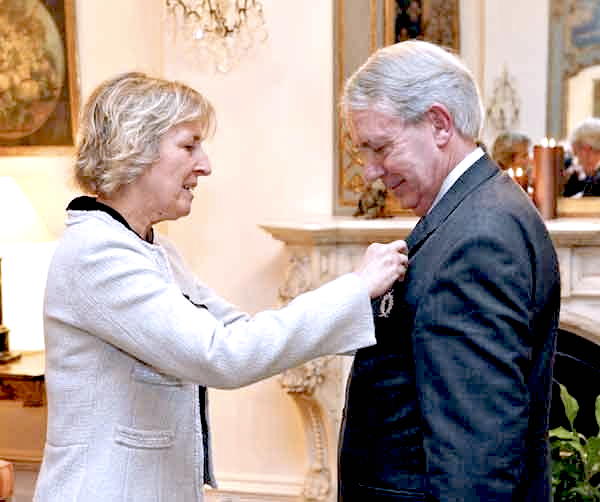


My cousin Michael is a recipient but I don't think he has yet paid his subscription to the Association.

My Légion d'Honneur

I am still waiting for my Légion d'Honneur for my work in the establishment of the European Bank for Reconstruction and Development, La BERD. Michael Somers has got his but his support staff have been forgotten.

I wondered though might I qualify for one of the palmy ones. They are, after all, two rungs down from the Légion d'Honneur and a Chévalier there is a whole nine steps down from the top if you count the internal ranks.

So I decided to try and make a list in support of my sterling contribution to French literature and culture over the years. It turned out not to be all that convincing.

I have supported French tourism by issuing day passes to tourists from Jersey CI to St. Malo.

I don't have a general in the family but I have given one-to-one tutoring to four grandsons of a French general.

I took two orals in French rather than English in the College of Europe to spare the egos of two francophones.

I brought a busload of students from Bruges to Lille in 1968 to the Assises Nationales of the Gaullist party.

I translated French documents for work when we had just joined the EEC and the Commission's translation unit wasn't yet up to speed with English. [Unfortunately this appears to be the wrong way round for the present purpose.]

I have written three original songs in French on de Gaulle, the EEC and the Civil Service, none of which have yet been performed before the general public.

I have also suffered the outrageous slings and arrows of former President Mitterand's long time economic advisor and éminence grise, Jacques Attali. Died for my country there I did.

I came to the posthumous defence of my first French teacher when he was traduced in a TV documentary by two Irish journalists. [Don't think that will help though as he was Flemish and opposed the frenchification of his native Flanders.]

I have given a talk in French in the Alliance, in the bicentenary year of Waterloo, on the Defence of Killiney Bay in the Eighteenth and Nineteenth centuries, with paticular reference to the Martello Towers. [Oops, the Martellos were to shoot at the French rather than at their enemies.]

I have had a cartoon of myself done in the Place du Tertre in Paris and also in the Alliance.

I have pointed out to the French Embassy (twice) that they were flying the European flag upside down. [Don't suppose that will endear me to them though.]

SOME SUGGESTIONS

I have attended a number of events in the Alliance in recent years. The most striking change over that period is the switch from La Cocotte to the new Médiathèque. The café was awkward. People had to be thrown out coming up to tea time to facilitate preparations for an event. There was some noisy machinery at what became the bottom of the room - fridges I think.

The Médiathèque is a bespoke environment and, as it houses the library, it is always quiet.

I had not noticed at previous functions, but there were a few drawback's to Dominique's event. I think what brought one of them out was the double focus on both the participants in the interview and the screen behind. The screen called for dim room lighting while the interview called for the reverse to be able to see, and photograph, the participants. Everyone, including the Alliance itself, is taking photos at these event for spreading on social media, and it would be in the Alliance's interest to facilitate this. I imagine installing a few spots to illuminate the podium without obscuring the screen should do the trick.

That's the lighting. On sound it would be better to wire up the participants so that a sound check at the beginning could achieve the best in clarity. It would also mean that the participants would not have to constantly worry about how they held the mics. The clarity would be more important to me than to many others. I struggled to follow the French on the night.

Given that the only microphones were those of the participants, questions could only be accepted from the first two rows if the rest of the audience were to be able to hear them. A roving radio mic would improve matters enormously.

Just some thoughts for another occasion.

Friday, April 27, 2018

COUSCOUS-POMMES FRITES


Hédi Kaddour
Click on any imaage for a larger version

I'm a glutton for punishment.

The first time I was at an interview in the Alliance Française I arrived more or less by accident. I have recounted this in an earlier post. I was down the back in the café where they used to hold the functions so I didn't hear everything and of what I heard I didn't understand a lot. Why don't those Frenchies speak slower?

This one was in the refurbished library/médiatheque where the functions are now held and I made sure to get me a front seat. I still didn't understand everything by a long shot. It didn't help that I had done no research on either Hédi Kaddour or Michael Cronin who was interviewing him.


Thierry Lagnau

The session was introduced by Thierry Lagnau, the Director of the Alliance, who was clearly pleased to have this famous novelist on the premises to be interviewed by a serious academic.

Before the interview started there was a vote by acclamation on whether it should be in French or English and the French won hands down.


Hédi Kaddour & Michael Cronin

Hédi is of mixed Tunisian/French origin. As he explains it, his mother was a "pied noir" from Algeria and his father was Tunisien. Hédi spent a significant part of his life in Tunisia and in Morocco. He describes himself as a "couscous-pommes frites", an expression I had not heard before but which is very evocative. And it is honest. I don't think Jacques Attali would take too kindly to the term. An interesting difference between the two men. Apart from being a poet and a novelist, Hédi is a translator of English, German and Arabic. So he was bringing quite a lot to the table.

Michael is 1776 Professor of French in TCD and he has an abiding interest in all aspects of translation. His CV, linked above, is a mile long.


You can pursue the links above to get the full picture but I will just mention a few points that struck me from among the bits I understood.

Hédi made a distinction between a reporter/ournalist on the one hand and a poet/novelist on the other. He saw the former as having a point of view to put across, whereas the latter is more like a window pane, putting the reader in touch with reality and remaining invisible himself.


He warned against amnesia; history, he felt, informs (éclaircit) the present and is ignored at our peril.

There was a thread on colonialism through his comments and I am just sorry I wasn't up to following it. His most recent novel Les Prépondérants deals with this in some detail and you can see him talking about it on Youtube. Well worth a watch.


He had an interesting point about stealing metaphors. You can rarely use the same metaphor in a translation as in the original text. But what if you were to make it a practice generally to import metaphors from a foreign language into your own. A constant process of enrichment. No difficulty for an Irishman understanding this one, given imports from Irish into Hiberno-English.


Michael asked him how he saw Beckett? Did he read him as a French author or as an Irish author operating in French. I didn't entirely follow the ramifications of the answer but I gathered that Hédi admired Beckett but was not influenced by him.


Touching on past social injustice against women, particularly in the period in which some of his writings are set, he cited the fate of women who had entered the workforce during WWI only to have their jobs stolen by returning veterans. Then, depending on their circumstances, they had to return to domestic duties, or in the case of single women, just get along somehow.


There was a fairly extended Q&A at the end, also in French. Needless to say I did not participate. My overall contribution consisted of a bum on a seat and a tweet after the event.

Saturday, March 17, 2018

JOUTES ORATOIRES


Statue de Louis Pasteur, cour de la Sorbonne
pendant les événements de mai 1968
Photo: Philippe Gras
Click on any image for a larger version

When I saw the notice in the Alliance Française newsletter for this Oratorical Jousting final (16/3/2018) I made up my mind there and then to go along. It was actually the final round in an interschools debating contest in the French language. More than 30 schools in the Leinster area had participated and the final was between Coláiste Íosagáin and Loreto on the Green. Two girls' schools, as it turned out.

I arrived a little early and decided to have a coffee in the Alliance café, La Cocotte. However the café was just closing when I arrived but they let me look around the current exhibition of photos by the late Philippe Gras. And what did I see among them but the one at the top of this post. The theme is freedom of expression and the photo was taken during the 1968 student uprising in Paris.

So what, you might say? But bear with me. The subject of the night's debate upstairs in the new mediathèque was LA LIBERTÉ D'EXPRESSION N'EST NI POSSIBLE NI SOUHAITABLE - freedom of expression is neither possible nor desirable. How apt, though I don't recall any of the contestants mentioning 1968. Both the French Revolution (1789) and the UN Universal Declaration of Human Rights (1948) got a few airings in the course of the night.

I had gone along with the intention of taking a few photos and doing a blog post if the night proved interesting. However I gathered the organisers were "wary of social media" which was a bit of a surprise, so I just determined to sit and listen and think.

The night did turn out to be very interesting so I decided to write it up anyway. I'm sure there will be plenty of photos on the Alliance site from the official photographer in due course.

I found the format of the debate intriguing.

I had taken part in the Gael Linn interschools debates in Irish in the 1960s. In those debates you only got the subject twenty minutes in advance. This was way before the internet so you had to rely on your wits and what was already in your head. You had three minutes to present your case. The teams as such did not take sides for or against the motion, that was left to the individuals themselves. Individuals' marks were then combined to give a team total.

In the French case, the subject is known well in advance though I'm not sure when sides are allocated. In any event there is plenty of time for preparation, deciding tactics, and deciding which points would be made by which team member. Don't forget that in this case a coherent case has to be made by the team as a whole.

An interesting variation in the French case is that for a specified period within the three minutes the speaker can be challenged by a member of the opposing team and there follows a spontaneous, and lively, debate between the two contestants until the adjudicator feels that that the point has been exhausted or the exchanges have gone on long enough. This is a interesting variation as, given that the main contributions have been prepared and well rehearsed in advance, it allows the contestants' spontaneous mastery of the language to be put to the test. It also tests their resilience under fire.


Handout: teams on the night & best speakers from previous rounds.
Click image for a larger version

My impression was that the teams were very well matched. Well they would be, wouldn't they. having come through a fair few rounds in this knockout competition

I thought Loreto were more at home in their French though I thought they had the harder side of the argument to defend - promoting untrammeled free speech (and yes Charlie Hebdo got a mention). They were sort of caught in a bind as the opposing team in their opening shot had defined free speech as unlimited freedom of expression and had gone on to argue for reasonable restraints. This put Loreto in the position of arguing in favour of being allowed "to shout fire in a cinema" as it were. Assuming I understood correctly what was going on.

Coláiste Íosagáin had, for their part, defined themselves into a defensible middle ground. I also felt that they had marshalled and structured their arguments better as a team.

If I had one general remark to make it would be that the contestants spoke a little too fast. I know, from my own experience, that you tend to do that when you are nervous and the native French do speak at a rate of knots. Nevertheless.

The advice we were given at the time by the adjudicator was: If you don't feel your speaking too slow, then you're speaking too fast. I'm sure many public speakers, at least the more thoughtful among them, would identify with that. Though when you observe this for a while it becomes second nature.

I'd say the jury found it a very close call in the end as the standard was high all round.


French Ambassador Stéphane Crouzat with Team Íosagáin

Coláiste Íosagáin emerged the winner. Bravo.

I don't know the marking system and, unlike in my case, the jury didn't give any analysis of how they arrived at their decision. I must keep an eye out for this contest next year and maybe talk to a few people in advance.

Below is Sadhbh Ní Ghráda from the winning team. Her father was a classmate of mine in the middle of the last century.


Sadhbh Ní Ghráda with parents Cormac & Máire

The debates have their own website where you can link to the rules and other background material.

Wednesday, November 22, 2017

BONJOUR !


Click on any image for a larger versionn

Another book launch at the Alliance Française in Dublin town. This time it's The Bonjour Effect by Julie Barlow and hubby Jean-Benôit Nadeau.

Its thesis is that conversation is an art form in France, guided by a complex set of rules, codes, conventions and taboos. In exploring these the book is a primer in the psychology of the French and it gives you pointers on how to cope with this very strange race of people.

It lets us in on the secret that talking to the French is not about communicating or being nice, its about being interesting. With this as a starting point the exalted state of "se démerder" becomes attainable to even the rankest amateur.


Director

The evening was introduced by the Institute's new Director Thierry Lagnau who succeeds former Director Philippe Milloux, who has now returned to Paris HQ.


Jean-Philippe Imbert


The evening was structured as an interview by Jean-Philippe Imbert with of one of the book's co-authors, Jean-Benoît Nadeau. Jean-Philippe is from DCU where he bears the intriguing title of Lecturer in Comparative Literature and Sexuality Studies in the School of Applied Language and Intercultural Studies (SALIS).

Jean-Philippe has appeared on this blog before, interviewing Olivier Litvine on the launch of his book Musique de Chambre.


Jean-Benoît Nadeau

So, let's get one thing out of the way first, the book's title. What's all this Bonjour stuff?

Well, believe it or not, this one little word is the key to the pearly gates of French conversation, and, as we learn, cooperation. Omit this simple greeting on meeting a French person and you're in the doghouse from that point on. A foreigner might just be given some latitude on a fine day but for the French it is de rigueur.

So maybe you think that's a bit thick. Well, believe you me, even in Ireland, there can be more to a simple greeting than meets the eye. Consider this little incident from the Mayo Gaeltacht early in the twentieth century.
Colm O'Gaora was a young teacher and a timire for Conradh na Gaeilge. He was new to the Irish speaking Bangor Erris disrict in Co. Mayo when he met a man along the road. "Dia dhuit" (God be with you) says he, in the traditional Irish equivalent of Bonjour. The immediate and vehement reply took him aback: "May God and Mary bless you and may bad luck strike you down you dirty old Protestant".
It really does matter how you greet people and if you want to understand Colm's faux pas check out this incident in more detail in my review of his book.


Julie Barlow

Before I go any further, do remember that the book is co-authored by Jean-Benoît and his wife Julie.

Clearly then, they are both responsible in equal measure for its content. However, when it comes to describing an incident to illustrate a particular point, it is described by whichever of them was involved in it. This is both a constant reminder throughout the book of its dual authorship and it makes for more interesting reading..

As Julie was not involved in the actual launch in the Alliance, I'm giving her a look in here.


It is important to know that the French put a lot of pass on what I'd call polish: speaking with supreme confidence, wit and loads of grammar. In fact the ideal is to speak written French. Bearing this in mind will enhance your understanding of the incident below which I have reproduced from my website.
Learning French was no less bizarre. I arrived in France, in 1963, with very good Leaving Cert written French (there were no orals in those days). The family were, sort of, nobility. There had been a general in the family on the mother/granny's side and all the adults spoke proper. The granny was very concerned with the deterioration in the quality of French spoken by the youth of the country in general and her own daughter's children in particular.

Meanwhile I was trying to converse in French, my ultimate ambition being to effortlessly speak the same colloquial brand of French spoken by the children and of which the granny was so critical. I had to think in English, translate into French in my head, mentally repeat the result three times and then deliver it before it evaporated.

Clearly in granny's view I was speaking prose, as had de Gaulle before me, and the house resounded to her loud exhortations to the children "Écoutez Paul", listen to Paul (ie speak prose). The irony of it.


And the wit bit.

Well, let's take Jacques Attali, economic consigliere to François Mitterand and subsequently President of the European Bank for Reconstruction and Development (EBRD).

Now there was a frenchman of sublime refinement who had trained his wit to a fine edge. He also had an abnormally large ego, the largest I ever met in fact, and clearly could never afford to let himself be outwitted, so to speak.

This incident, from the Board of the EBRD, on which I served briefly, will give you a flavour.
On one occasion, Tony Faint, the UK Director, who was from DIFID, had a mild go at him, when he suggested that the Bank should give some consideration to what niche might be appropriate for its operations. This was red rag to a bull as far as Attali was concerned and he responded that in French a niche was a kennel where you kept a dog. Tony replied that where he came from a niche was a space that housed the statue of a saint. "Yes, but they're all dead" was Attali's quick retort and that killed that intervention stone dead, so to speak.
Clearly Attali had fully absorbed this desideratum of the French education system. However, he didn't always have it his own way.
One of the Board's concerns was a feeling that the economic analysis underpinning some of the projects was a bit thin. A result, no doubt, of the speed at which matters were being pushed along. The cudgel here was taken up by the Spanish Director, José Luis Ugarte . He was a nice man with a slightly dry sense of humour. He had a background in economics, in academia and in the OECD, so he was well qualified for this encounter. "Mr President" says he "I think we might take this project a little more slowly and deepen the economic analyis underpinning it". "Not at all." says Attali "Economics is dead. I know. I taught it for years". "Ah yes, Mr President, but that was socialist economics". The Board collapsed with laughter. A beautiful rapier of a sentence. Attali had been socialist President Mitterand's economic mentor over the previous 15 years, even before he came to power. And the Bank was set up to supplant the failed "socialist" economics of the Soviet era. Even Attali had to muster a conceding smile.
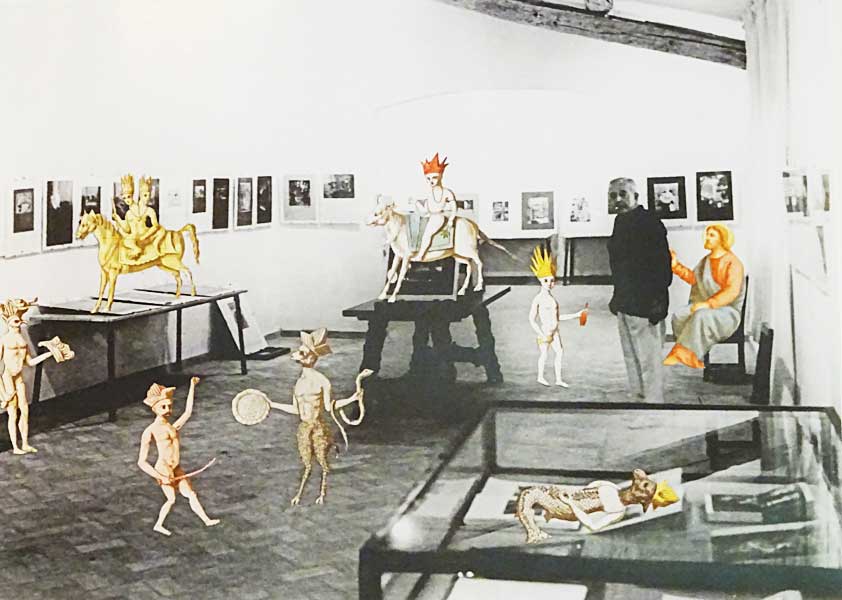
That was one of only two occasions I have seen Attali bettered in repartee, a skill in which he prided himself.


The french education system lays great stress on philosophy as a subject, even in the early stages. By this is meant teaching pupils how to think. This doesn't mean that rote learning is absent. It isn't and there is a lot of it. But it does lead to the French having respect for public intellectuals.

Attali frequently boasted that he was a member of two minorities: he was a Jew and an intellectual. But that in my view was not the whole story.

The French have a binary view of the answer to the question: "where are you from?" which makes the question problematic. We Irish have no great problem asking the question, often followed by "who are your people?". Though I have to admit I once met a man who was ashamed to be from Mayo (God help him).

Posing that question to a Frenchman, however, can be very insulting. The binary is French or not French and asking the question could be seen as questioning the respondent's frenchness.

In listing his membership of minorities, Attali was careful to avoid mention of his membership of the third minority. He was born in Algiers. Clearly the less said the better.


The book comments on Madame de Staël who was known for running top class salons of conversation. She had interesting views on various national characteristics having herself lived all over the place.

Apparently she was stunned to learn that German conversation did not tolerate interruptions. The authors point out this was probably because, in German, the verb invariably comes at the end of the sentence.

I have included this random observation because it made me smile. Sort of a German joke.

Did you know that French is not a language? Seriously. At least that is the French view. It is simply an aspect of their culture.

For example we would describe French learned by a former monoglot English speaker as their second language, Turn this around to a former monoglot French speaker learning English. The English is described as their first language.

I sort of knew about all of this from my days in Mlle Giudicelli's class in the Alliance in the sixties - Langue et Civilisation Française and all that.


I also knew that in France political leaders are allowed a certain level of gilded luxury. It also applies to very senior civil servants. This whole group are seen as leaders in cultural discernment. It is actually a part of what brought down Attali in the end - his Carrara Marble (another story).

I learned some new things from this book about what I'd call permanent French attitudes, but also about how meanings had in some cases shaded from my time.


For instance I read that Copain now has acquired sexual connotations. In my day, the newly published pop magazine, Salut les Copains, could be translated as a sort of Hi Guys among young people. God knows how you'd have to translate it now.


So lets end on a good sexist note - a book called La Femme Parfaite est une CONNASSE, The Perfect Woman is a Bitch (putting it politely - Larousse gives you Stupid Cow as an alternative!).

Gotcha there, maybe. It is actually a pro-woman book written by two women. So there.


The main man spoke French to me afterwards and I have to say the Canadian version is different and I'd have needed more time to tune in. Must brush up on my Céline Dion.

Anyway, the book is a most enjoyable, and sometimes hilarious, read.

It will firm up your prejudices and explain why you don't have to feel guilty about them any more.

It will also arm you for any future ventures into that cockpit of cultural conflict which is the French language.

Buy it

Wednesday, May 31, 2017

FRENCH TOUCH


Click on any image for a larger version

These days I'm keeping an eye on what goes on at the Alliance Française in Dublin. Over the last while they have had some interesting events which I have attended and subsequently blogged. When I saw the ad above in the newsletter I was interested. Anything to do with the web or the internet immediately catches my attention. So I put it in my diary and duly turned up last night (30/5/2017).

The reception downstairs, in La Cocotte, was OK. I had intended having my tea there before the event, a ham and cheese baguette. But they had stopped serving food earlier than usual because of the reception and I had to make do with a cup of coffee. Never mind, I scoffed a few morsels of pizza from the finger food at the reception and that kept me going for now.


Then it was upstairs to the newly refurbished library (médiatheque) for the main meal of the evening, so to speak. The still image, above, on the screen didn't really enlighten me about what to expect next.


In any event there was a guy there with a posh camera clicking away, so I'll have an alibi if there's a major bank heist elsewhere during the following hour.


A very obviously French man took the mic, welcomed us all, and said a whole lot of things I didn't understand.

And then the lights dimmed.


First off was a charming little French piece about a guy who got picked up by this woman on a park bench. On one of his later rendevous, instead of the woman it's her husband who turns up.

At this stage we're all expecting a bit of a scrap. But no. The wife has been sparkling since she started bedding the young man and the husband wants to know his secret. Is it oral sex? Is it S&M? What's the trick? Unfortunately the answer is "nothing". No tricks. Just a younger man.

This was a charming little piece, beautifully made. But at the end of the day, all we got were some snippets. It was clearly episodic and short episodes at that. The full story was residing elsewhere, somewhere.


Next was an amusing animated cartoon about a wee creature who was under attack by cartoony monsters, but he kept getting the better of them.

This was followed by some mafia type sequences and an item involving a young man trekking around the countryside accompanied by a young lady who occasionally vaporised and reappeared close by.

I was still wondering exactly what it was I was at, when it came time for the draw.


We had been told to put our business cards in a basket, and if we didn't have cards to write our names on pieces of paper. These all went into a basket for a draw for two free tickets to the Dublin Web Fest in November.

I didn't win and could make a few statistical comments but I'll forbear.

So, now that it's over, what exactly was I at.

Well, there seems to be a new trend developing where people make short episodic videos, designed mainly to be watched over the web on smart phones and I had just seen excerpts from the crème de la crème of such videos.

I would have known what I was letting myself in for if I had followed up the link in the Alliance notice above. You can get a fair view of the matter from the Press Kit on that site.

So next time - #RTFM

Saturday, May 13, 2017

COLLAGES


Jacques Prévert
Click on any image for a bigger version

My first encounter with Jacques Prévert was in 1965 in a high rise just outside Paris in the newly constructed dormitory town of Sarcelles. I had been sent by the Alliance Française in Dublin under the French Government's programme, Connaissances de la France, which introduced foreigners to all aspects of French life.

I didn't actually meet the man himself but came up against a gut wrenching poem of his recited by a passionate young Frenchman. La Grasse Matineé has stayed with me ever since and never fails to touch me when I reread it.


Now the wheel has come full circle and Jacques has come to Dublin, to the Alliance Française. Well, not exactly, as he died in 1977, but the Alliance is running a Prévert Festival to commemorate the fortieth anniversary of his death. Part of this is an exhibition of his collages.


Prévert could not paint, but he could do collages. He produced his images with scissors and paste and a vast collection of visual images collected over the years. For him this was the same as words and conveyed the same message.


On discovering Prévert's collages, his friend, Pablo Picasso, said to him: You cannot paint but you are a painter.

His collages are a lesser known part of his work and the Alliance has taken the opportunity to introduce them to the Irish public in the course of this festival.


As I can neither draw or paint but can claim a modest level of competence in Photoshop, I am very much encouraged by Picasso's remark above which at least makes me a potential "painter" or "artist".


Ruairí "Daumier-Lautrec" Quinn
Minister for Learning and Lithographs
Checkout Ruairí's own cartoon here.
See works of Lautrec & Daumier.

My proudest achievement to date is this multi-layered cartoon of Ruairí Quinn, when he was Minister for Education.

The exhibition continues until 30 June 2017. Do drop in to La Cocotte for a decent cup of coffee and a bit of visual stimulation.

Saturday, April 15, 2017

ENCOUNTERS: PHILIPPE MILLOUX


Philippe Milloux
Click on any image for a larger version

I first enountered Philippe when he politely asked me to leave the Alliance Française café, La Cocotte, one evening in October 2012.

I had been having a quiet cup of coffee with little else on my mind when I had noticed people scurrying hither and tither under the direction of a smartly dressed gentleman with the air of a stage director.

It was only a few minutes later that I was politely asked to leave. I then found out that all the scurrying was in preparation for a public interview to be held in the café within the hour. The "stage director" turned out to be the actual Director of the Alliance, the interviewer was to be Loïc Guyon, Chairman of ADEFFI, and the interviewee none other than Philippe Djian.

This was a bit of a coup for the Alliance. Philippe Djan is a famous, insightful, and somewhat steamy, writer who apparently pulls no punches. So after allowing myself to be evacuated I immediately signed up at reception to attend the event.


There must have been something inspirational about that night because, come the bicentenary of the Battle of Waterloo in 2015, I decided to offer to do my Martello Towers gig, but in French this time, at the Alliance. I assume Philippe didn't bat an eyelid when he got the proposal, though it was later in the process that I had direct contact with him on the matter.

I must have spent about six months translating and adapting my talk for a francophone audience. The proposed format for the evening chopped and changed as the net was cast far and wide to match me up with a suitable counterpart to deliver a Café Historique.

In the event a compatible partner could not be found and I went solo, but with Niall O'Donoghue bringing along the magnificent model of his wonderfully restored Martello Tower to further thrill the audience during the interval.

It must have been a success because, at the end, Philippe asked me if I had any more of them. Alas not. This was a serious once in a lifetime job.


And then there were the exhibitions. This one was recapping on some French history through various advertising posters. The one above appealed to me particularly for its time anomaly and, anyway, I have a particular interest in typewriters and all things to do with printing.


Philippe declared himself particularly happy to welcome the exhibition, Drawing Freely, which drew on the work of some 50 cartoonists from around the world setting out their approach to free expression in a variety of domains.

His choice of Seamus Dooly, Secretary of the Irish NUJ, to launch the exhibition was inspired. Seamus had been on the #Charlie march in Paris and pulled no punches on what he thought of some of the participants and their activities on their own home fronts.

The photo above shows Philippe with Seamus (centre) and John Horgan, former Press Ombudsman.


The Emerging Photographers exhibition (and competition) was a serious contribution by the Alliance to encouraging young photographer graduates. There were three exhibitors, who happened all to be girls (young women to you), and the standard of their projects was high.


Kathleen Shields, from NUIM, has written a very interesting book on French attitudes to the English language in France. The Irish launch took place in the newly refurbished médiatheque and was picked up by the publishers in their blog.


Theo Dorgan, Jean-Philippe Imbert, Olivier Litvine

And, finally for now, an interview with Olivier Litvine on his recent translation of James Joyce's Chamber Music and the Irish launch of the book. This turned into a lively discussion on the pros and cons of translation and was a great night.


The events above chronicle my involvement with the Alliance Française in Dublin over recent times and I have listed them as an illustration of my encounters with the Director, Philippe Milloux, and his work.

By definition, they are only a small, and not necessarily representative, sample of what the Alliance does. They do, however, give some indication of the scope and quality of Philippe's tenure, which is unfortunately coming to an end this summer.

Philippe's background is in education, he started out as a teacher, but he has spent many years now as Director of various Alliance Française implantations around the world, starting with Pondichéry, in India, where Olivier Litvine, mentioned above, is the current Director.

When he took up his present post, Philippe gave a long interview to Eléonore Nicolas which you can hear here - in fast French.

Unfortunately Philippe can not apply for another stint as Director of the Dublin Alliance. Them's the rules, but I must say also the Alliance's loss.

Wishing Philippe all the best in his next incarnation.

Update 1 July 2017
Philippe's Farewell Message