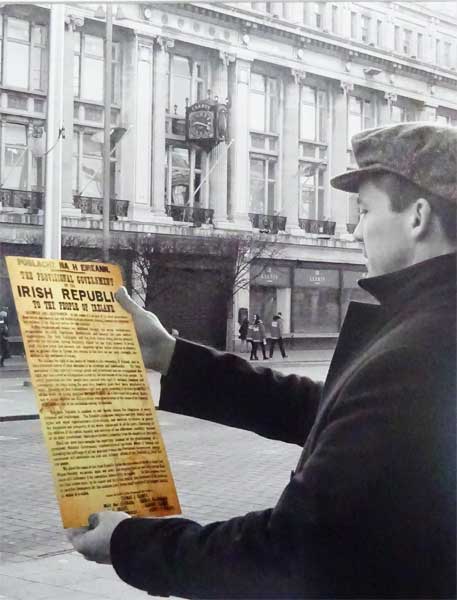
Showing posts with label photography. Show all posts

Friday, November 17, 2017

OUR TOWN - THE FINAL


Click on any image for a larger version

A last minute review of the winners in the Michael Edwards photo competition. I have reported on the various phases of this year's competition including on the line-up for the final.

The moment of truth arrived on 16 November as the prizewinners and overall winners were selected from among some fifty images from clubs and eleven from individuals.


Dermot Edwards

Dermot Edwards, who with his father Michael, runs the photographic shop (I nearly said Photoshop) in the Donaghmede Shopping Centre, looks a happy man.

In kicking off the final adjudication he thanked all who had been involved in supporting the competition during the year through sponsorship or simply by entering photos. Even this blog got a mention.


Eamon O'Daly

Eamon O'Daly, from The Outdoor Studio and Skerries Photography, was this year's adjudicator for the final.

Before getting down to the business of the evening he outlined his general approach to the adjudication.

Unlike Ray McManus, two years ago, who treated us to a diatribe against the use of Photoshop, Eamon had a more sensible approach. Post-processing was acceptable as long as it was simply enhancing the qualities of the original photograph and not creating a new artistic production.

He also mentioned the inadvisability of using glass frames when you don't know the precise lighting conditions under which your work will be displayed. It is important to avoid reflections which interfere with how people actually see your work.

I've been making this point myself till I'm blue in the face but nobody seems to be paying any attention.

He also made clear, in the context of this year's theme of OUR TOWN, that he preferred the location to be identifiable in the photo itself and, as our world was all about people, he would like to see people included in the photos. His choices very much reflected these considerations.

There was some muttering in the audience that it would have been good to know all this in advance. As it is, the existing rules are few and very general in nature. I know Dermot feels that this is to encourage the widest possible entry and while I have some sympathy with that point of view I think a little more specificity would be no harm. I'll leave it at that for now.

Overall winner in the Clubs category


As is customary, the results were announced in reverse order with the overall winners revealed at the end. As I'm not going to cover all the twenty or so prizewinners I'm doing it the other way round.

Top prize in the clubs category went to Dermot O'Flaherty from the Swords Viewfinders. This was for a black and white study of Bewley's Café in Grafton Street. A fine piece of work which, incidentally, took in both of the adjudicator's principal criteria. Personally, I'm always thrilled to see black and white holding its own.


As well as a fine trophy, courtesy of Dublin City Council, Dermot got a special gift from Michael. The Minox camera was standard spy equipment during WWII and the Cold War. Michael told Dermot he could use it but better not to.

My mother had a Minox but it was mainly me that used it. I must fish out the negs one of these days.


Dermot said that the photo had been inspired by one taken by a lady who was currently not well, so it was nice to see her inspiration get some recognition in the circumstances.

Winner in the Individual Category


The winner in the individual category was Vivion Mulcahy, a Northsider currently resident in Luxembourg which is where the winning photo was taken.

As Vivion is currently in Luxembourg his prize was accepted by his friend and photo-colleague, Barry Crowley from the Howth Club.


From the contented look on Barry's face you'd think it was him what took it.


The photo is a night shot of the River Alzette as it flows through the old low city (“Grund”) of Luxembourg.

It is a very crafted shot and worth your while to study it closely. I have seen other shots of this scene but not as subtle as this one.

The entire Grund is a UNESCO Heritage Site and so is protected from indiscriminate development. It is a warren of steep and narrow cobbled streets and includes a number of small restaurants and bars. In days gone by the lepers of Luxembourg were segregated in the Grund. Thankfully leprosy is no longer endemic in Luxembourg.

The best way to get there is via a lift which descends from the upper city (“Ville haute”) through hundreds of feet of solid rock and from which you emerge into a rock tunnel lined with artworks. From there it is a short walk to where the photo was taken.


The river is usually placid, but not always - as this photo of a riverside house graphically illustrates. The river's current level is some 12 feet below its flood level in 1756 (marked by the plaque at the top left of the photo). And this before climate change.


Other prizewinners


Just a quick take on a few other winning shots.

Another shot from Dermot O'Flaherty, this time a moment seized in St. Stephen's Green.


And yet another from Dermot, this time a night shot at the Spire in O'Connell St.


Michael wonders who took this one of fishermen on Howth pier.


And it's Pat Carey from the local St. Benedict's club and last year's winner. Another shot with strong people interest.


And yet another one from Pat. This time its buskers on the Clontarf prom with the two iconic chimneys in the background. The adjudicator particularly commented on this one as fulfilling both his main criteria with the people interest here being very strong. An unkind member of the audience drew attention to the smoke emanating from the chimneys.


Despite the intense individual rivalry in this competition there is a sense of club solidarity at the end of the day. Here the Sutton club pose for a family photo with their prize-winning photographer.


And I can't finish without mentioning Raheny. That club didn't get any prizes this year but I thought I'd show you Billy White's entry. Billy won the competition two years ago. I caught him sneaking out with his entry, as I did myself a few minutes later.

As the captions this year were restricted to "single word locations" I have taken the liberty of explaining the rationale behind my own entries here.

Thursday, November 16, 2017

MY TOWN


Pearse Square
Click on any image for a larger version

It's that time of year again, the climax of Michael Edwards photo exhibition/competition has come and gone.

The theme this year was OUR TOWN and the idea was to illustrate what makes where we are from special. I think expectations were for the positive rather than the negative. The individual category was there again this year and I put in five entries. As far as the judges are concerned the entries are anonymous and you are only allowed a short title for each photo indicating where it has been taken. So no commentary then.

Well, as I did last year, and now that the competition is over and anonymity is no longer required, I thought I'd just explain my photos a bit and say why I took them in the first place and why I picked these particular ones to enter.

Pearse Square, above, was originally Queen Square and it was renamed along with the street in 1921. This was on the eve of formal independence and was done by a City Council that had been long at loggerheads with the Imperial British Authorities.

The old sign is still there on the corner building and it has been left to deteriorate over the years. Understandable I suppose. However the newer sign is one of those cheapo versions and it too has deteriorated. I was very surprised it was not replaced by a more worthy version in the run up to the 1916 commemorations. Even the Padraig Pearse pub around the corner got a whole new frontage for the occasion and I entered a photo of that for last years competition.

I entered this one this year as typical not only of my beloved town but also of the country at large. Lots of lip service but very little action.


Macken Street

My town had its share of bombs during the troubles and thankfully that is now all behind us, pace Brexit. However this Continuity IRA sign appeared in recent times in Macken Street and there is no sign of anyone doing anything about it. I suppose it's as well to be reminded from time to time that peace is hard won and needs constant nurturing.

I entered this as a reminder of what may be simmering just below the surface.


Bettyglen

Enough of the rough stuff. A neighbour called me one day recently to have a look in her back garden. To her surprise, earlier in the day this duck with is clatter of ducklings paraded out from the garden bushes.

There are no ducks on our estate though there is a bird sanctuary down in Dollymount where both native ducks and passing flocks can be seen. It was presumably one of these that found itself pregnant and diverted to the nearest friendly and semi-concealed welcoming space.

My neighbour put out some water and the ducklings all took a bath, from which they can be seen above returning to the comfort and concealment of the bushes..

The duck people came later to take them away and look after them until they were able to go on their way.

I entered this to show that there can be some very pleasant and unexpected aspects to living in the suburbs.


Raheny Village

This one doesn't really need any explanation in a world of increasing surveillance. Nice of them to warn us. Pity the cameras were not suitably trained when the public defibrillator was stolen from round the corner not all that long ago. Hopefully the replacement is now under as much surveillance as I am myself.

I entered this one to reassure myself that, in my town, someone up there is watching over me.


Nassau Street

And, finally, this caught my eye on my way home from Culture Night.

Dublin Canvas has been doing a great job around the city getting the grey traffic light control boxes tarted up. This one looked particularly appropriate on a rubbish collection evening.

I entered this one to show that at least one, and possibly two, citizens have retained a sense of humour despite the current onslaught on our environment from fly-tipping and careless disposal of rubbish. The plastic bag tax was a start but we still have a long way to go.

Sunday, January 22, 2017

EMERGING PHOTOGRAPHERS


Click on any image for a larger version

I am not an arty type. When I hit art it is usually by accident.

That's how I found myself at the Collective Juncture exhibition in Wexford town in 2013. The exhibits there were from the graduating class in Contemporary Art from the Carlow/Wexford IT campus. When I arrived they were awaiting the adjudicators to have their work assessed for their final degree exams. Following this the exhibition would continue open to the public for a month.

I thought it a wonderful idea. But did I know what was meant by contemporary art? Well, I assumed it meant art emanating from living artists. But no. I was told it was also art which touched on the experience of the artist and actually meant something to them or made a difference to them. Having seen the wonderful exhibition I now know what they meant.

So, what has all this arty stuff got to do with Emerging Photographers? I think, a lot. My encounter with this current exhibition brought me right back to my Wexford experience.

Here we have an exhibition by three recently graduated young photographers and they would all fall within the definition of contemporary art discussed above. It was all very encouraging.

This was not just decorative stuff, good and all as the photos were. It was a case of three powerful messages which were very relevant to modern living and which figured high in the personal, social and political consciousness of each of the photographers.

This is the first year of this exhibition which is hosted by the Alliance Française Dublin. On exhibition is the work of Edit Elias, Deirdre Fallon and Sophia Harding.

Each of these three newly graduated Irish photographers were selected by a member of the Alliance Française Photo Committee, which includes: Margaret Brown (professional photographer), Anthony Haughey (artist, researcher and lecturer at Dublin Institute of Technology) and Tanya Kiang (Director and curator at the Gallery of Photography).


l-r: Tanya Kiang, Deirdre Fallon, Edit Elias, Anthony Haughey,
Philippe Milloux (Director of the Alliance),
Sophia Harding & Margaret Brown.

The exhibition was launched on 19 January 2017 and during it's run, until 6 March 2017, the public are invited to vote for their favourite photographer. This vote, together with the choice of the AF Photo Committee, will determine which of the three selected photographers wins a trip to the renowned Arles Photography Festival.

So let's see what's on offer. I'll give my own reactions below. It is well to remember though that what is on display here is roughly only half of the original graduation exhibition of each exhibitor. I'm saying this as a look at the full set of photos deepens your appreciation of the set and in some cases gives further individual commentary on each of the photos. You can see the full sets on the exhibitors' own websites. Their names, in the headings to the individual sections below, are linked to their websites.


Edit Elias


Edit Elias & Anthony Haughey

Edit is introduced by Anthony Haughey. She is a Dublin based photographer from Hungary and has just received her BA Honours degree in photography from DIT.

Her project Congo Mémoire explores the history of the Congo (Democratic Republic of) in collaboration with members of the Congolese community in Ireland. It consists of two elements: (i) a book of contemporary and family photos and manuscript diary/commentary tracing those members' experience, and (ii) a series of photos powerfully illustrating the exploitative nature of the relationship of outside powers with the area over the years.

I was pleased to see she had not forgotten to include the pioneering exposures of Roger Casement.


Edit with photo from her hands set

Each of the powerful pictures consisted of a hand or hands holding a representation of a different aspect of exploitation.

Without looking at the commentary I identified a diamond, a bullet, a coffee leaf and an oil pipe switch. Turns out I got only one out of four right. I had the diamond. But the "bullet" was actually a capacitor, from a computer, which relied on a precious metal, Coltan, which has unique properties vital to modern electronic devices. At least I identified the leaf, but it was not a coffee leaf, just a fallen one, which I take to represent the general exploitation of the area's natural resources and the suffering of its people through through interminable resource wars. And finally the oil pipe switch. Well that was a red rubber broken off the top of a pencil. I had not known that the rubber produced out of blood and suffering had been known as red rubber.

Edit's text is a no holds barred commentary on the suffering that goes into the products we use heedlessly in our daily lives.


Sophia Harding


Sophia Harding & Margaret Brown

Sophia is introduced by Margaret Brown. She has her BA Honours degree in photography from the Institute of Art, Design and Technology, Dún Laoghaire. She is currently living in Bundoran.

Her project Now You See Me explores how we view others. Are they all that they seem? Is what we see all that they are? Do we stereotype people on the basis of limited impressions? Do we avoid engaging and simply see them as "other" and so keep them at a safe distance.


Sophia with photo from her mother & child set

Sophia has taken the same mother and child and shown them in a variety of contexts.We see powerlessness in the form of addiction and neglect in a domestic setting and also in those forced to flee such a setting and become refugees at the mercy and whim others. Do we engage or stand back and let the camera facilitate us classing them as "other".


Deirdre Fallon


Tanya Kiang & Deirdre Fallon

Deirdre is introduced by Tanya Kiang. She initially studied photography in Waterford, where it was accompanied by criminology, but her degree is from Griffith College, where she won the Canon award for her final year exhibition.

Her project The Watchmen draws on Bentham's Panopticon.


Central Bank plaza from Deirdre's set
Many levels and layers of observation

The basic idea is that we behave differently when we think we are being watched. So how is our behaviour in the modern world affected by omnipresent surveillance including our own self-awareness as we operate in cyber space.

In The Watchmen the subject's peripheral location is swapped with that of the Panopticon's watchman, and you are invited to consider the implications


Final Images


Philippe Milloux

Philippe ends his term as Director this coming August and I think the Alliance will miss him. He is a very hands on Director and takes great pride in his own work and that of the Alliance generally. I have found him great to deal with in the short time I have known him.

Under some pressure from me, Philippe overcame his natural modesty for a moment and admitted that the idea for this exhibition/competition was his. He reminded me that it is part of the Alliance's mission to give young artists a chance to become known and seen on the cultural scene of the cities where French institutions are located. He put the idea to fellow experts and good friends from the photo panel and they loved it. In the style of a good leader he praised the hard work of Christine and her Assistant who were charged with making it happen.

He's thrilled that it went so well and the Alliance intend to run it annually and so build up a network of photographers from among the participants. This will be a part of Philippe's legacy to the Dublin Alliance.

I don't know where he's going next but Bon Voyage Philippe.


Tanya Kiang

I couldn't resist this one of Tanya with the cultural and business background.


Margaret Brown & Philippe Milloux

Margaret snapped me in the course of the evening. I haven't seen it yet but I snapped her back anyway.


Deirdre Fallon & Anthony Haughey

A final shot as I observed Deirdre and Anthony in conversation from the roadway beneath.

And just to prove that I wasn't the last to leave.

Tuesday, August 02, 2016

REMEMBERING 1916


Click on any image for a larger version

This competition is now over and this post traces it from beginning to end. I have amended the post to bring it up to date (17/2/2017). There were five clubs entered in the clubs category and each got a month's exhibition. This was followed by an exhibition of the finalists and included those from the individual (non-club) category.

There was a set theme for this year's competition: Remembering 1916. This can be interpreted as loosely as you like and looking at the first club to exhibit, the Howth photo club, there is no shortage of ingenuity and imagination out there.

I am starting this post with a some shots which appealed to me from this first round.

Anyway, to the business. Why did I pick these particular photos? What was it that appealed to me?

HOWTH
August

The opening shot above is from a re-enactment of the Rising. I like the black and white and then the colour in the proclamation. Clery's in the background is also evocative as it was destroyed in 1916 and has recently been wrecked again, this time by the vultures.


The printing of the proclamation was a story in itself and much ingenuity was called for to get the finished product onto the streets. Having had an Adana hand press in my day I'm a sucker for anything to do with the old style printing where each individual letter had to be set up. I can nearly smell the ink looking at this photo. And I like the upside down "I" in the word RISING which I take to represent the many imperfections in the finished product on the day.


A standard posed shot but here counterpointing 2016 and 1916 as a young boy reflects on the fate of an ancestor, a member of the Citizen Army, killed during the Rising.


And finally, that element of 1916 that had been ignored by nationalists for most of the century since, the battle of the Somme in the latter half of 1916. I had an uncle killed in a High Command cock-up there in September 1916 and I'm glad to see this aspect of the times coming to the fore.


SUTTON
September


Click on any image for a larger version

This could have been a very conventional shot but it isn't. I like the quirky composition with the heads behind the papers. And full use is being made of that wonderful series of archive material The Revolution Papers which will be continuing publication up to the end of the year. Today's Miriam Lord adds her own quota of quirkiness.


I think it was an Italian squadron which actually provided this tricolour at the end of the day. But it is a fabulous shot and reminds me of the 1966 Vampire flypast at the GPO.


This apparently casual shot has many layers of meaning, at least for me. The GPO is the backdrop but it is the layman and not the nun who is collecting for the poor who were supposed to have gone by now. But what of this rare religious bird? What does she do for a living. Educate, rehabilitate or just pray? Not forgetting the wee ad for the visitor centre which includes a 1916 museum.


ST. BENEDICT'S PHOTO GROUP
Donaghmede
October

Some interesting entries this month from the local photo group.

A few personal favourites below.


We might as well start with a bang. There are a lot of features in this photo which might escape the casual observer. You need just the right light, a convenient puff of wind and a good sense of positioning at the very least.


This is a very creative shot of the Children of Lir in the Garden of Remembrance in Parnell Square (just in case you were wondering). The sculpture itself is a beautiful piece of work but quite hard to photograph with any originality. The use of black and white adds a touch of the ethereal and the grotesque.


My first reaction to this one was "What the hell has this got to do with 1916?". Then I noticed the columns and realised that it was a view FROM the Custom House. Very clever.

Then I wondered "What had the Custom House got to do with 1916 other than look down on the Helga shelling the city centre?". But what I didn't know, and just checked out, was that 200 prisoners were held in the courtyard during the Rising without food, water or any treatment for their wounds.


And there must have been other people who knew the score, as these variations (above and below) attest. Nice thinking here and proof that, to the photographer, no source is inexhaustable.


This one made me smile. Maybe it's a bit on the cheeky side. But beautifully taken, right down to the water drops.


This one is not as easy as it looks. The idea is good and maybe not entirely original. I've tried it myself without success. Angles and lighting are very tricky and this shot has captured it all.


This is a particularly dramatic shot and must have been captured in the depth of a wet night to get that degree of abandonment.


This is a very creative photo which relies on some clever post-processing. The location of the Connolly statue limits very much the angles from which it can be taken. It is very hard to get any sense of depth or space with the rear wall so close to the statue and the traffic in front. It is almost like trying to photograph Connolly crossing the road among today's buses and cars. This is a beautiful piece of work.


RAHENY CAMERA CLUB
November

This month it's the turn of my own local club.

There were fewer entries this month than previously, though there may be more to come as the Bank Holiday intervened.

Some shots that struck me are reproduced below and I'll just make some general comments at the end.


Overall, I had difficulty seeing the link between 2016 and 1916 in some of the photos though I may have been missing the subtleties involved. I was glad to see that again this month's club had not forgotten the Somme and I was also glad to see some black and white entries.


SWORDS VIEWFINDERS
December


While this photo is clearly a re-enactment of 1916, it has an added dimension in its controversial backdrop honouring the constitutional thread in the struggle for home rule, which backdrop was shamefully removed following protests from those whose version of Irish history is a begrudging one.

I also like the relatively high black and white content in this month's exhibition.


I'm not sure how much symbolism is intentional here, but for me it is a very provocative photo and all the better for that.


I like the composition in this photo. It suggests lots of movement and is not shot from the usual angle. Unfortunately there is another similar photo in this month's exhibition.


Unfortunately my reproduction here doesn't do this photo justice. But it caught my eye for something of an abrasiveness or shrillness about it.


This representation of Frongoch is of a section of a ceramic panel showing various features of the camp site and its environs. I have to declare a particular interest in Frongoch and its surroundings and this photo caught my fancy.


I'm not sure how the connection with 1916 works here unless it is the funeral of a well known rebel. I note the undertakers are Masseys who have laid many of my family on the Ma's side to rest. I like the photo for its sense of dignity in death without overdoing the macabre.

The Swords Viewfinders are exhibiting their entries up to the end of December.


FINALISTS
February


The final exhibition in this year's competition has now gone up. It consists of the ten finalist images from each of the clubs' entries and also the ten finalist images in the public category. That makes 60 pictures in all in the final adjudication. That will take place on the evening of 16 February 2017 when the prizes will also be presented.

I'm not going to say too much about this particular exhibition as most of it comes from material covered above and I have entered the competition myself and am still in the running.

The Clubs


Many of the photos I have reproduced above have gone on into the final as have many others.

My own favourite is the one above. It shows great imagination and makes great use of two commemoration exercises, The Revolution Papers and a current newspaper supplement. It shows a good sense of humour and is well composed. Let's see if the judges, whoever they may be, agree with me.

The Individuals

Again I have to compliment Michael Edwards for introducing this new category in the centenary year. It is clear from his shop and Facebook page that he is interested in promoting photography among the wider public and this is a great incentive for people to jump in and click.


This is the new centenary wall, so to speak, the finalist images in the public category. I think it was probably planned for this category to have its own exhibition, as did the clubs, but between on thing and another, including Christmas and Santa, the programme fell behind schedule. I suspect the clubs may have been getting a bit impatient for the final adjudication. In any event the public category went directly into the final phase.

You can see from that display that the images covered a broad range of 1916 related locations.


This one evokes what must be a unique event. A non-combatant wife shot in Ringsend during the Rising while her husband perished on the Western Front on the same day. She died from her wounds a few days later. He fell in Hullach, in Northern France, where a German gas attack poisoned 385 members of his regiment. One thing we have learned during the recent commemorations is that the Rising cannot be considered in isolation from WWI, and I was glad to see that theme taken up in a number of entries.


Clerys also figures in a number of entries. It is a searing comment on what has not been achieved by the Rising or the State which followed it, when staff could be turfed out into the street while the moneybags scuttled off with pocketfulls of dosh gained from a disgraceful financial wheeze. The tattered tricolour says it all.


THE FINAL
16 February 2017


And so the great moment finally arrived. The judge had a good pedigree and we were all anxiously awaiting the outcome. Kay's café were lining up the refreshments and the prizes were out on display. Some very handsome bronze plaques commemorating individual Proclamation signatories and some medallions commemorating all of them.


Unfortunately Kyran couldn't make it to the presentation but he had done his adjudication and the prizewinners in the overall clubs category had little rosettes beside their exhibits.


So it was up to Michael to do the honours, and we were all on tenterhooks to see who was the overall winner of this prestigious competition.

The Clubs


And the well deserved winner was Pat Carey from St. Benedict's Photo Group, the local club in Donaghmede.


Pat later posed proudly with his winning shot, which was one of those I had picked out at the Benedict's exhibition (above) as a favourite.


And just to let you have another look at it in all its glory.

Pat was actually the first person I met when I arrived on the scene last night. He told me I had embarrassed him, but fortunately not mortally! It turned out that the nine favourites I had picked out of the Benedict's entries for inclusion above had all been his. Seems like we both have good taste when it comes to photography.

The Individuals

I had a few shots riding in the individual category, but when I checked out that category I didn't see any rosettes on the wall, so I was a bit disappointed. Then I noticed that cards had appeared on three of the entries since I last saw them and I assumed that these were the prizewinners in that category. None of them were mine.

As it happened, Michael started with this category, though I missed him saying that. He started praising a photo for its simplicity, relevance, and natural lighting and I was trying to figure out which one that was when it turned out to be the one below, Seomra 1916.


I was thrilled as this was one of mine and it turned out I had won the individual category in the first year of its existence as a separate category.

I have been taking photos since the 1950s and this is the first time I ever won anything in a competition.

You can get the backstory on the photo here.

Raheny

I'm glad to report that, again this year, Raheny did well on the prizes front.


Anne Nathan

Anne Nathan with another lily, and this one is bleeding.


Dom O'Brien's lady with a rifle in one hand and a mobile phone in the other.


A special prize for Sharon Hughes's look back to Joseph Plunkett through a modern child's history homework and two different generations of letter, one on paper from Joseph to Grace and one on a mobile phone referring to the homework.

And I'm in Raheny myself.


Next Year


Finally, Dermot announced the theme for the next (2017) competition, Our Town - what makes where we are from special.
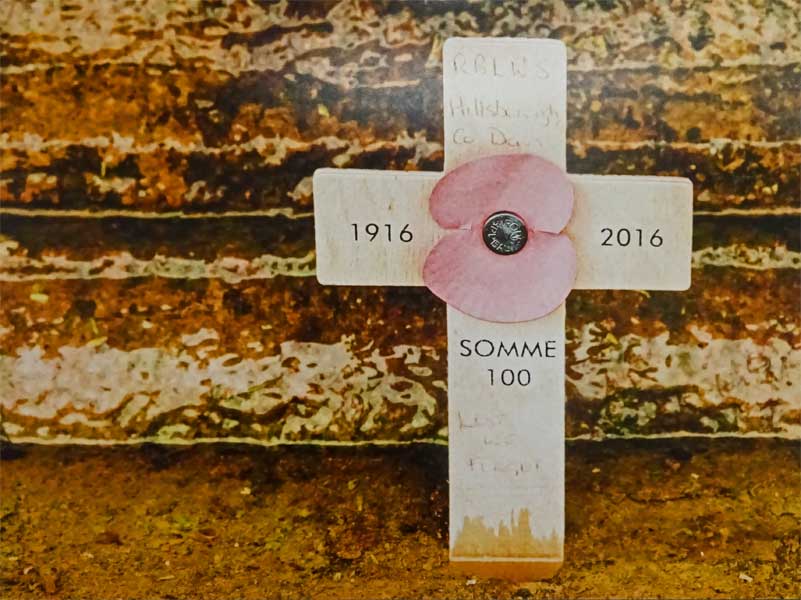


I would just add a general qualification/apology to any of the photographers who may be looking at their own photos on this post. There may be slight variations in lighting and perspective from the originals as I photographed the exhibits on the wall under the prevailing lighting and in some cases had to do a little post-processing to get back as near to the original as possible.

Thanks to Michael Edwards and the Howth, Sutton, Donaghmede, Raheny & Swords Photo Clubs for allowing me to reproduce the images