Showing posts with label EBRD. Show all posts

Wednesday, December 28, 2022

PHELIM MOLLOY


Phelim's long time colleague and friend in the Department of Finance, Stephen O'Neill, summed him up in his condolence message on RIP.ie
Phelim was a wonderful friend and colleague. He will be remembered with affection by all who knew him in the Department of Finance.
I didn't know Phelim well, hardly at all in fact, in my own years in the Department of Finance, that is until he was nominated to the Board of Directors of the European Bank for Reconstruction and Development in London.

I had been involved in the negotiations setting up the bank in 1990/91 and then served a year on the Board as Irish Alternate Director.

I was resident in Dublin with the day job and travelled to London for Board meetings. This was a most unsatisfactory situation and my Danish Director was not getting the support he needed or deserved. There was a need to appoint a resident Alternate in London, and Phelim got the job.

So he became my successor, residing in London for the next two years, and I was his desk officer in Dublin.

As a desk officer you learn a lot about the abilities and character of those you are looking after and I've experienced the whole spectrum.

From my point of view, Phelim was ideal. We worked as a team and he well understood both the Department of Finance and the Irish national interest. We never had a bit of trouble this end and Phelim was both trusted and respected by the Board. He worked well with the Director of our constituency, Lars Tybjerg, and between them they built up a lot of political capital on the Board.

When Phelim returned to the Department he became my boss, and a better boss you could not ask for. He did not interfere but was always there with good solid advice when you had a problem. And above all, he was very fair.

I was saddened today to hear of his death and will always cherish his memory.

May he rest in peace.

Phelim's death notice on RIP.ie

There was a beautiful funeral mass/ceremony this morning (30/12/22) in Booterstown church. The music was perfectly chosen and performed. Phelim's daughter, Deirdre, gave a wonderful and balanced eulogy.

The recording is likely to be available here for about the next month at least; the eulogy is at 1hour,3minutes,30seconds in.

Thursday, August 21, 2014

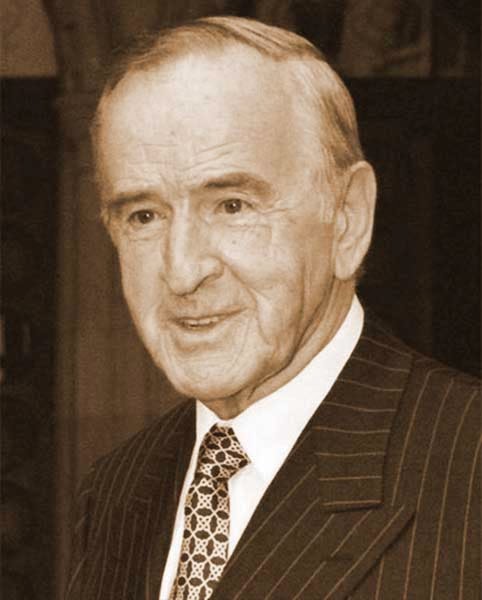
Albert Reynolds RIP


Albert Reynolds, RIP

Albert Reynolds was my Minister from November 1988 to November 1991. He was the Minister for Finance and I worked in that Department (Ministry).

I didn't have any direct contact with him in the early days, or even during the negotiations for the establishment of the EBRD from late 1989 to mid 1990, which body of work was on my desk. The negotiations were led by Michael Somers and the then Taoiseach, Charlie Haughey, took a hands on interest in them as they had been initiated by his good friend French President Mitterand and Ireland held the EU Presidency in the first half of 1990.

Albert's first real involvement with EBRD was the signing of the Articles of Agreement in May 1990 at the Elysée Palace in Paris. He actually signed the articles twice. No, not in a gesture of extravagance which would not have been his form, but firstly as the Bank's Governor for Ireland and secondly on behalf of the EU Presidency.

His next involvement with the EBRD was at the inauguration of the Bank in London in April 1991. By then we had, of course, relinquished the EU Presidency and he was attending solely in his capacity of Governor for Ireland.

The Chairman and CEO of the Bank was President Mitterand's former adviser Jacques Attali and, as a man of high culture, he had arranged a working lunch for Governors where they would be entertained by the renowned cellist Rostropovich. As I have explained elsewhere, Attali had invited Mary Robinson, the newly elected President of Ireland, to the lunch in place of the lowlier Finance Minister and Governor for Ireland. I felt obliged to get this protocol gaff reversed and managed it by citing the likelihood of an Irish constitutional crisis if Attali persisted in his mistaken campaign to notch up as many Heads of State as possible at every function he organised. This was a working lunch for Governors and the presence of a constitutional Head of State with no executive functions related to the Bank was completely inappropriate.

I don't know if Albert appreciated Rostropovich more than Mary Robinson would have but that was not my problem.

I don't think he was in any way impressed by people's nominal status. I introduced him to Viktor Gerashchenko, then head of the Soviet Central Bank, and the lead Soviet negotiator at the talks. I thought he might like to have said hello to a Soviet dinosaur as the USSR was coming apart. He hadn't the slightest interest.

As it happened, after the first day, Albert got fed up with the whole thing and I got a call in the middle of the night to say he wanted to go straight back to Dublin. This was arranged for first thing the following morning.

Now Albert's speech was scheduled for that morning and as I was now Head of Delegation I was faced with either cancelling it or making it myself. As I had written the speech I was loath to see it vanish so I opted to give it myself. The Norwegian Minister, whose speech was scheduled for the afternoon, was also anxious to be gone. He was looking for a morning speaker to swap with and, as I was going to be around anyway, I swapped slots with the Norwegians. That gave me plenty of time to make a few amendments to the speech to insert a few, not too obvious, digs at Attali who had been getting on my wick from a good while back.

I did inform the secretariat of both the swap and change of personnel but the latter never got as far as the captioners in the video room. So the video of me went out captioned as Albert Reynolds, Governor for Ireland. It is now presumably reposing in some archive and may well confuse historians in times to come.

Finally, Albert is accused of being a "one page man" as thought he couldn't read more than a single page at a session. It was very clearly explained in this morning's excellent Today with Seán O'Rourke that this originally stemmed from Albert, the businessman, insisting on any proposal put to him not going over one page. If he liked it he would then follow it up. In a ministerial/civil service context the "one page" submission also served a purpose. It meant that the person writing it had to have a very clear idea what precisely they were proposing that the minister do and it also gave him a very focused action brief.

Some more EBRD reminisences

Sunday, April 06, 2014

Return Visit


Click any image for a larger version

As a suitably attired Micheal D is set to pay the Queen a visit, some few reflections are in order.

This will be the first official visit of an Irish president to the British monarch.

It is in return for the Queen's visit to Ireland in 2011.

That visit was a major success, and, leaving aside the Queen's few words of Gaeilge, which probably meant no more than did her son's use of Welsh at his investiture as Prince of Wales in 1969, the highlight for me was her laying of a wreath in the memorial gardens in Parnell Square. This was a British monarch honouring those who gave their lives opposing her predecessors. Surely a significant moment.

At that time Sinn Féin refused to participate, but now Martin McGuinness, Deputy First Minister in the NI administration, will accept an invitation to attend a banquet in Windsor Castle. Sure to be another significant moment.

Michael D is not the first President of Ireland to visit Britain while in office. That honour goes to Mary Robinson in the spring of 1991. Her visit was not an official one and was not to the British monarch. She had been invited by Jacques Attali to attend the inauguration of the European Bank for Reconstruction and Development (EBRD) as she had been one of the adjudicators in the competition for a bank logo.

That turned out to be her first trip outside the country since her election as president and it was conceded in the teeth of serious opposition by Government (who have the last say in these matters).

Charlie Haughey, then Taoiseach, was appalled at her election as president, and even more appalled by her promise to turn the office into a more significant one that theretofore. As a result he opposed almost anything she wanted to do, and the idea of letting her loose on the British "mainland", where she might get up to God knows what sort of mischief, was just an "appalling vista".

However he couldn't keep her bottled up for ever, so he reluctantly agreed to let her attend the inauguration, knowing that she also intended to address the Irish immigrant community in London. For safety's sake he sent a plane load of officials along to keep an eye on her (relatively speaking, that is).

Anyway, she got away with it, and continued to raise the profile of her office over the remainder of her tenure. (Though the height of that office so far must be the then President Patrick Hillery's refusal, in 1982, to accede to Charlie Haughey's request to block Taoiseach Garret FitzGerald's resignation and so indirectly install Haughey as Taoiseach.)

I was not involved directly in Mary Robinson's visit, except for getting her bounced off a lunch list which Attali had drawn up. He had a fixation on dealing with Heads of State where possible. The lunch, which was entertained by Rostropovich in person, was billed as a working lunch for EBRD Governors and as she was not in that category I had to make sure that it was Albert Reynolds, then Irish governor, who was invited.

Amazing the things you do for your country.

Some more EBRD reminisences

Saturday, February 25, 2012

BERD Migration


This is the 20th anniversary of the first overseas annual meeting of the European Bank for Reconstruction and Development (EBRD). The Bank was established at its inaugural meeting in London in early 1991, and true to its commitment to its geographical area of operation, the second meeting was held in Budapest in early 1992.

Hopefully, without revealing any State Secrets, I can reminisce a little on some peripheral aspects of that first overseas meeting.

I should start, however, with a word on the Bank's logo (above). Jacques Attali, then PDG (Chairman of the Board of Directors and Chief Executive of the Bank) decided to hold a competition for a distinctive logo. The Bank's title in French, is Banque Européenne pour la Reconstruction et le Développement, or BERD for short. In English, BERD sounds like a bird and there was a likilehood that the entries would produce flocks of them. So the first rule was that birds were out. Apart from the visual implications of this ban, it would also circumvent the usual quota of smart-alec remarks, like birds not flying on one wing, birds in the hand, in the bush, and so on.

Another aspect of the competition was the adjudication panel, which included Mary Robinson, who had become President of Ireland by the time the Bank was inaugurated, and Václav Havel, who, by that time, had become President of Czechoslovakia. As a result of her participation in the panel which chose the logo, Mary Robinson was invited to the inauguration in London in 1991. That was her first trip outside the country as President and it made the then Taoiseach (Prime Minister) Charlie Haughey very nervous. But that is another story for another day, perhaps.

But back to Budapest in 1992. The first event of the Annual Meeting, from my perspective, was the IRA blowing up the Baltic Exchange in the City of London just as I was leaving Dublin for Budapest. So, what has that got to do with the EBRD? Well, the Baltic Exchange is just across the road from the EBRD's then London HQ in Leadenhall St., and were it not for the AGM and the bulk of the Bank's staff being in Budapest at the time, it is likely that many would have been injured, perhaps fatally. As it turned out, apart from broken glass all over the place, only one member of the Bank's staff was injured.

The attack had one immediate consequence for the Irish delegation to the meeting. Our security status was immediately raised to unprecedented heights and the security man assigned to us turned out to be KGB trained. Why the London explosion should have had any implications at all for the Irish delegation in Budapest was not clear to me. But I suppose the Hungarians would not have been up to speed on the nuances of the Irish situation and, in any event, would not have been inclined to take unnecessary risks.

My own initial reaction was how was I going to face colleagues when my countrymen had just almost blown up the Bank's headquarters in London. As it happened, the AGM was attended by the Irish Ambassador accredited to Hungary, Michael Collins, and when I mentioned my concerns to him he was quite firm in his advice. "Hold your head high. They have not done this in your name, whatever their claims." This was a new line of reasoning for me, but as ambassador he must have had to deal with this sort of situation many times, and it made sense. So I steeled myself and took the recommended line.

Our elevated security status did provide some amusing incidents, however.

At one stage, the head of the Irish delegation, Bertie Ahern, then Minister for Finance, had occasion to visit the loo. Our hyperenthusiastic security man preceded him into the convenience and kicked in the door of the cabin to make sure there was no-one hiding inside and to make equally sure that, if there was, he would be in no fit condition to progress his assassination mission. Imagine ...?

Another incident gave the same security man a real fright. It was during lent, and as is publicly known, Bertie is a daily massgoer during this holy season. Well, on the day we were leaving for home, I had arranged for him to attend mass in one of the big churches. Could have been a cathedral for all I remember. Anyway, the security man accompanied the Minister and his Secretary General into the church and kept them under very strict surveillance during the ceremony. This wasn't all that difficult as they were in the one place all the while. Near the end of the mass, the security man, who was beginning to relax and had joined the rest of us at the back of the church, jerked in shock. The mark was on the move. In fact both marks were on the move. He leaped into action and paralelled the progress of the marks up the aisle to the main altar where they received communion and, much to his relief, returned unharmed to their seats. A close call, and a reminder that you are never off duty until the mark is finally out of your jurisdiction.

A lot of water has passed under the bridge since then, but these vivid memories remain as though they were yesterday.

Some more EBRD reminisences